7 Keys to Boosting Employee Engagement in the Hybrid Work World
by Eileen Clegg and Gibron Kury

Unraveling the Meeting Dilemma
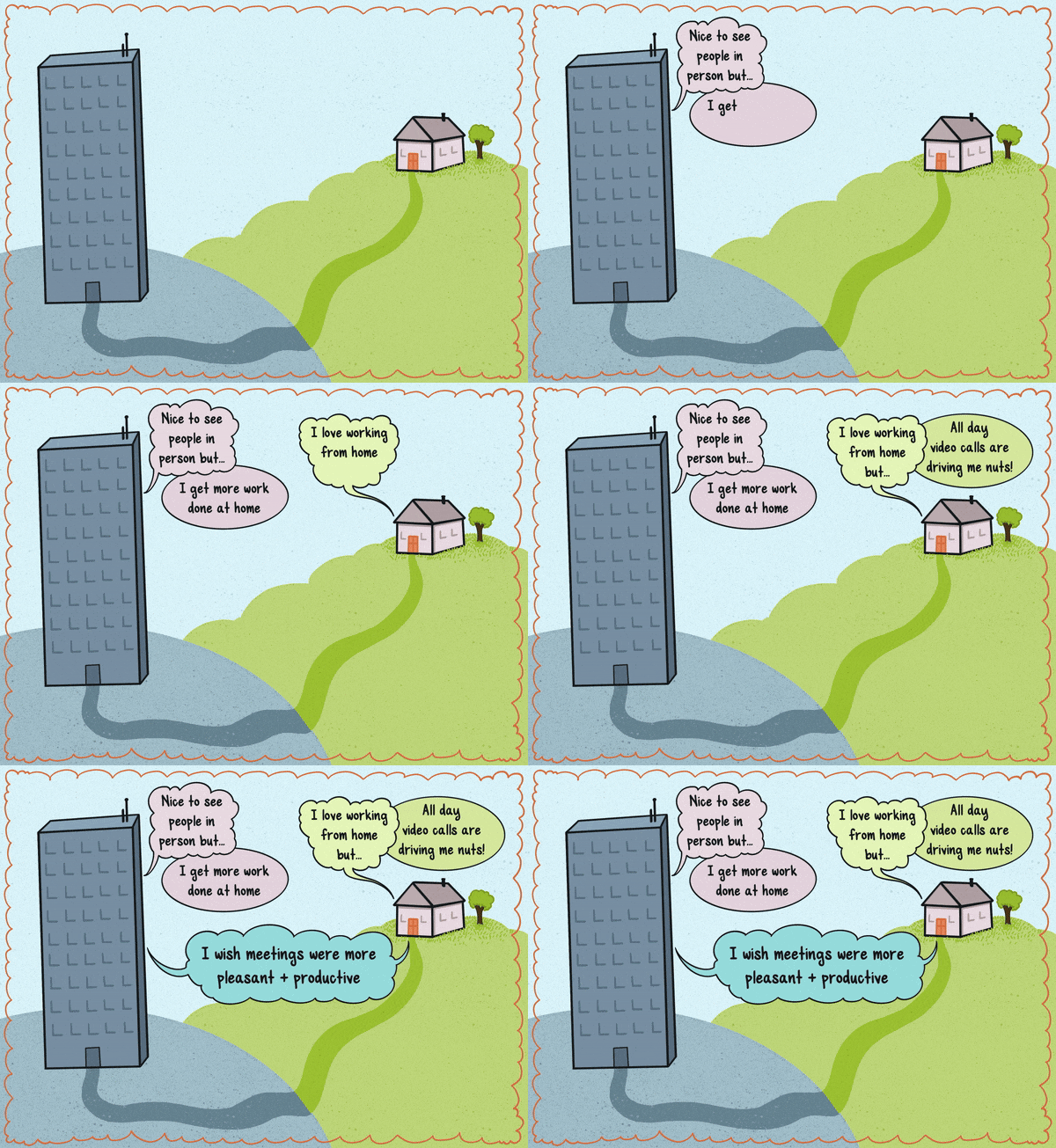
“I don’t want to go back to the office” -vs- “I’m tired of back-to-back online meetings at home.” It’s not either/or. Many are saying both. What’s a leader to do? Work flows better when people are happy, and there are compelling financial reasons to foster satisfaction in the workplace. Currently, employee engagement is at its lowest point in a decade, globally costing $8 trillion in lost productivity, according to Gallup. It will take time for the new hybrid work culture to settle. In the meantime, let’s look at one aspect leaders can control: the meeting experience.
Addressing Employee Needs
What are some simple but impactful meeting practices that could create a satisfying and successful experience? To identify them, our Tapestry team of facilitation, leadership and design experts put our heads together with two authorities in the human resources field, Kevin Wheeler and Dart Lindsley. Building upon the 7 documented drivers of employee engagement, we identified 7 keys to Meeting Engagement, each with specific actions.
The 7 Keys to Meeting Engagement
1. Explain the “Why”
2. Amplify Voices
3. Jazz it up with Dynamic Learning
4. Recognize Individual Employees
5. Celebrate the work-life blur
6. Prioritize Well-Being
7. Be authentically flexible
Turn the Keys: Specific Actions and Examples

1. Explain the “Why”: Employees are increasingly purpose-driven in their work. They want to add value and feel valued. Leaders can create meeting experiences that help meet employees’ laudable desire for their work to have impact. Here are some key ways to address the “why” when it comes to meetings:
- Set clear intentions and goals for meetings.
- Make attendance individually meaningful by clearly communicating the value of individual contributions.
- Clarify how the meeting contributes to organizational goals.
- Make sure the topic is clear to all parties and background material is presented in advance (ideally as one-pager).
- Explain the reasoning behind asking people to show up at a meeting, whether it’s in person or online. Wrong: “you have to come into the office every Tuesday and Thursday.” Better: “We’re asking everyone on the team to come in on Tuesdays and Thursdays because we believe that a face to face gathering facilitates working together on projects.”

2. Amplify Voices: It could be a red flag when people are fading out of meetings with their camera off or continually phoning in when others are on a video call. Re-engaging them may be as simple as letting people know their voice matters and making time to hear from all. Try to:
- Ensure active participation by everyone regardless of attendance format.
- Create a level experience: Either everyone in the room or everyone on video or phone–it doesn’t seem to work when some people are physically in a room together and others are disembodied voices.
- Plan your meeting ahead with sections for specific contributors, balancing speaking time for all.
- Use online polling and chat engagement in large meetings where full participation won’t work.
- If the meeting is a briefing or presentation, leave time at the end for Q&A moderated by someone who monitors the chat during the meeting.
- Fill the key roles that make meetings work: A facilitator, a note taker, a timekeeper.

3. Jazz it up with Dynamic Learning: Not just for career success but for personal growth and satisfaction – learning is a human value that drives engagement, especially for highly motivated individuals. Meeting tedium can be deadly for the spirit of people who are intrinsically curious and eager to discover something new. Meetings can be part of a dynamic learning culture. Here are a few ideas:
- During online meetings, incorporate something surprising and stimulating that will capture the attention of participants and reframe the conversation.
- Pop up a provocative visual that summarizes the conversation in an artistic frame that reveals insights about the group and stimulates more conversation – yes that’s what our company Tapestry does!
- Structure meetings around questions more than answers. Questions are just more compelling
- As an ice-breaker, ask people to share something learned recently that surprised them.
- As a leader, share news related to your industry, especially innovations.

4. Recognize Individual Employees: A low-cost, high impact way to boost employee engagement and productivity is through public recognition, according to Gallup. The recognition should be authentic and specific. Surveys identify recognition from organizational leaders as the most appreciated, but the majority of employees reported not receiving positive feedback regularly. How can meetings become a convenient platform for regular recognition? Some ideas:
- Acknowledge individuals‘ accomplishments whenever an opportunity arises during the meeting
- When people report on their progress, freely elaborate on the positive aspects of their work (especially with people who are loath to toot their own horn).
- Follow up post-meeting to describe how individuals and their work are contributing to company goals.
- Focus especially on functions that are not as obviously praiseworthy but essential; e.g., back-end processes compared to the sales and marketing

5. Celebrate the work-life blur: The pandemic prompted a cultural shift towards work-life integration, rather than the older idea of work-life balance. Balance implies toggling back and forth between two different aspects of life. Integration reflects today’s reality that work and life are blurring together, often happening under the same roof. Our relationships also are more integrated, with colleagues becoming friends. We welcome children and pets popping up during work meetings. Here are some practices that leverage the positive aspects of this shift:
- Foster team bonding with regular discussions where people can share personal updates and their activities outside work
- Start meetings with a fun question or light icebreaker so people associate good feelings with your meeting. One question our Kury uses is, “what would you do if there were no computers?” Lindsley plays the game Tradle (an online game about country exports) the first five minutes of every meeting.
- Invite people to share their ideas and practices for integrating home and work life
- Have tolerance (or better yet, joy) when children and/or pets make appearances on the meeting screen.

6. Prioritize Well-Being: During the pandemic, well-being emerged as a priority for employees, leading to a massive increase in physical, mental and psychological support, ranging from online counseling and meditation apps to empathic training for leaders, who began enabling accommodations to make life easier for workers. Because meetings can be a strain for people–whether it’s a trip to the office or back-to-back meetings with no bio breaks–this is definitely a target area for improving the employee experience. Some ideas:
- Combat meeting fatigue with simple stretches–especially for keyboard-weary hands
- Let people take turns sharing favorite office stretch routines
- Consider phone-only meetings for discussions not requiring visuals, allowing participants to walk.
- Encourage physical breaks away from video by holding 50-minute meetings that allow a break in between
- Respect that people sometimes have “off” days when interaction is difficult, even when they’re not sick. Offer them another way to engage; e.g., listen to the meeting audio later and write their thoughts with the team (as with every suggestion in this post, we are assuming that employees are responsible and would not take advantage of flexible options.

7. Be authentically flexible: Flexibility means adjusting to changed circumstances rather than following a rigid schedule. The ability to work at home when it makes sense is a big part of flexibility that a whopping 87 percent of workers would like, according to McKinsey. But there’s more to flexibility than working at home. Flexibility involves changing schedules or priorities on the fly based on what’s the most productive use of time. How can leaders demonstrate flexibility when it comes to meetings?
- Back to the “why”: Ask yourself if you really need to convene a particular meeting at all!
- Get input from team members about the value of regular meetings. Would they be more productive with asynchronistic work? Are 1-1 or small group collaborations more effective with whole team meetings less frequent.
- Be scrutinous about duration and flexible about time based on need. Do you need a 30 minute meeting? Will a 15 minute check-in do? Should it be a 50 minute brainstorm instead?
- Understand that people have different needs: Some may thrive on the frequent team meetings while others find them a nuisance. Is there a way to accommodate different personality types?
Navigating the Hybrid Future Together
We’re in a time of profound change in the work world. There aren’t clear answers about how to brighten the employee experience while ensuring productivity. As we continue to navigate the hybrid work landscape, we hope the suggestions above will be helpful. But let’s all put our heads together. Please share your ideas and experiences with us!
———
About the Authors:
Eileen Clegg, CEO of Tapestry, is an industry leader and innovator in visual meeting facilitation. eileen@vtapestry.com
Gibron Kury, VP of Engineering for Tapestry, is a deeply experienced team leader, engineer, and leadership coach. gibron@vtapestry.com
About the Contributors:
Kevin Wheeler is founder of Future of Talent, a writer whose Human Resources column has an international following. He is the author of the new book Talent Excellence: Using Digital Capabilities and Analytics to Improve Recruitment
Dart Lindsley is Strategic Advisor for People Experience at Google. In his weekly his podcast Work for Humans, Dart holds discussions with futurists, leading HR strategists weekly and technology innovators.
 Tapestry AI Blog
Leave a comment